“We went there and then it broke.” A child may know exactly what that sentence means while leaving the listener with several questions. Retelling an afternoon involves choosing a starting point, remembering people and places, and deciding what someone else needs to know. It can be a surprisingly demanding task hidden inside ordinary conversation.
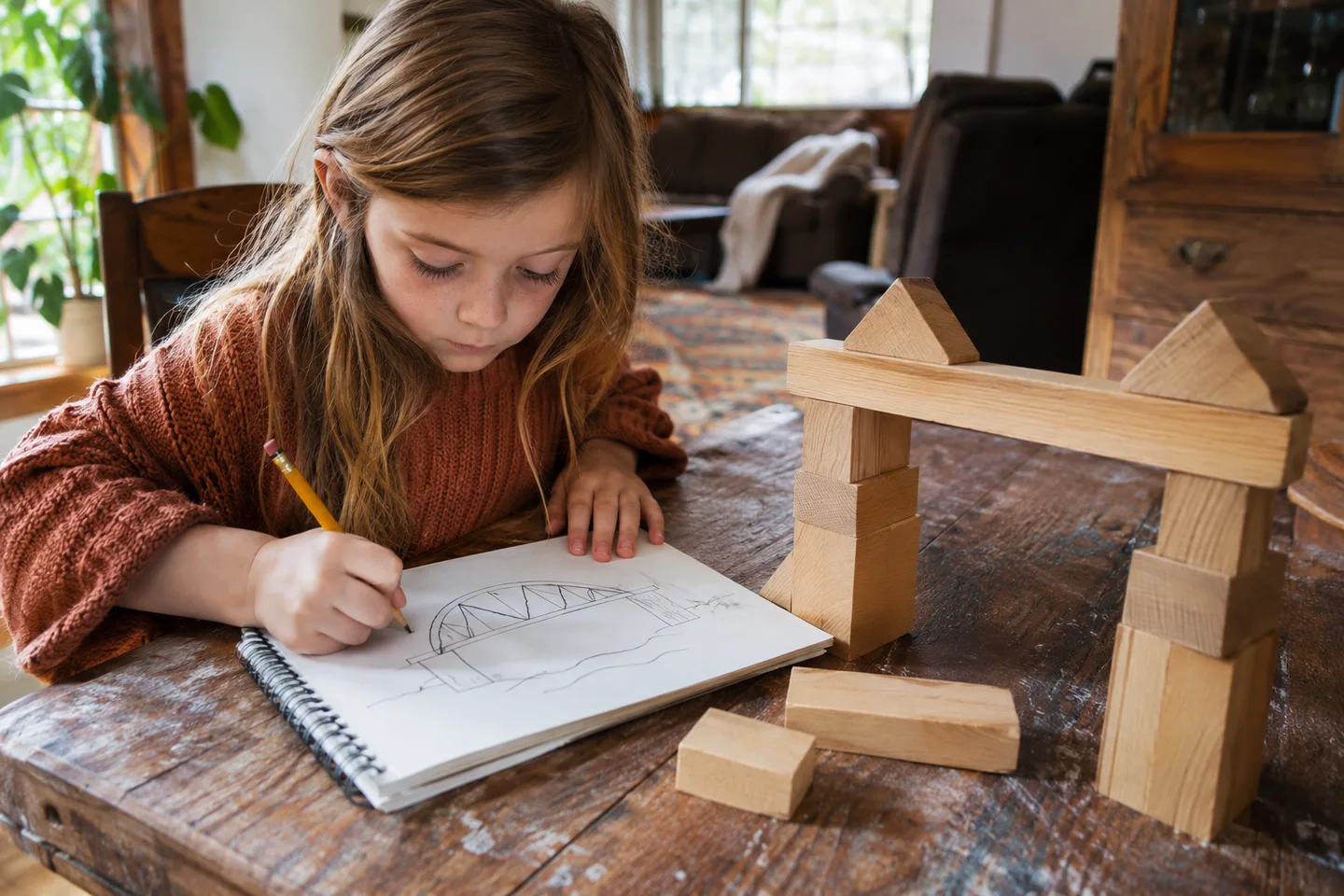
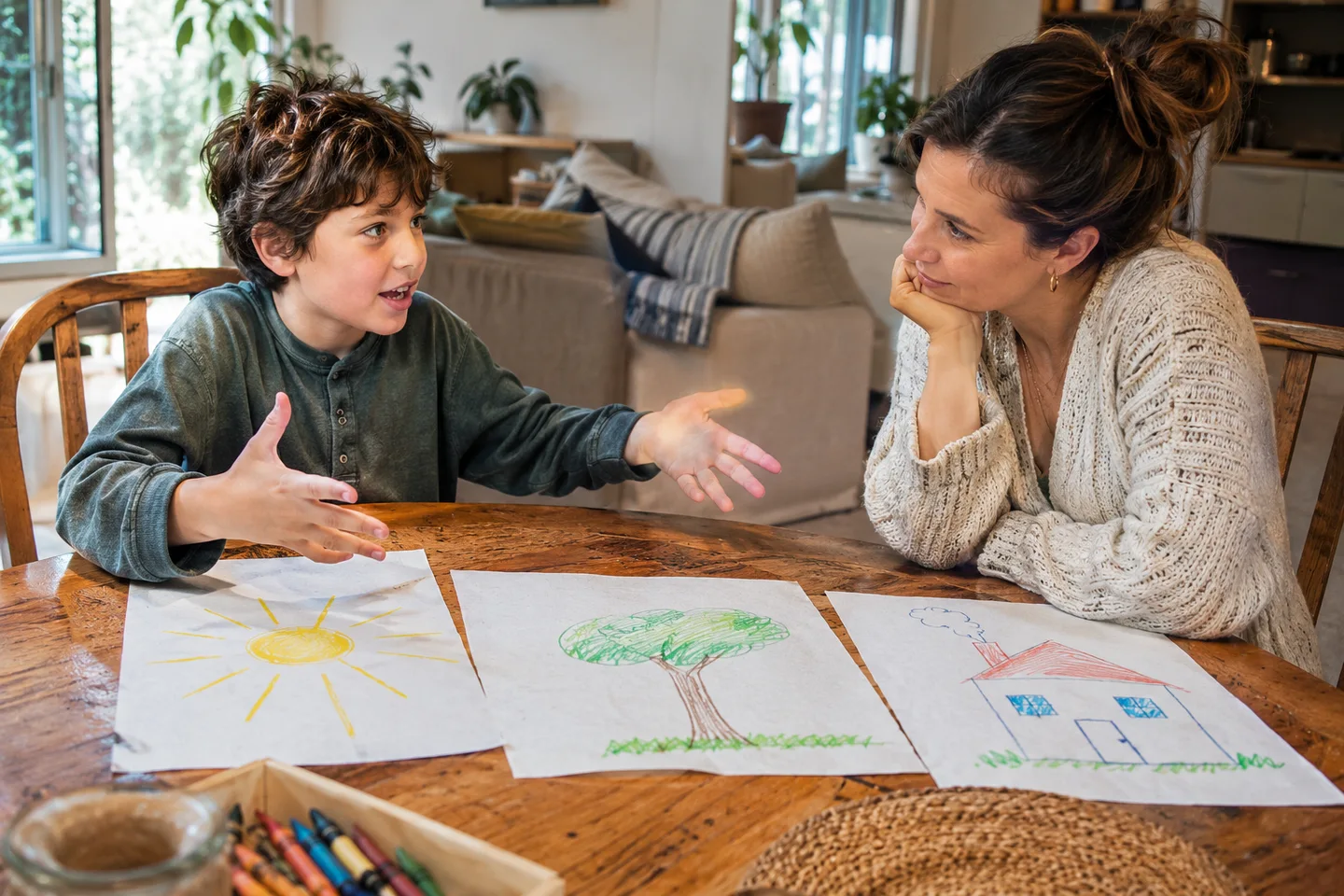
You do not need to turn dinner into a speaking lesson. A few drawings on scrap paper can give a child something to point to while they tell a small story. The event might be building a tower, helping unpack groceries, or playing a game. Choose an everyday experience the child is comfortable discussing, with no pressure to share private or upsetting details.
Begin with a manageable moment
A whole day contains too much material for many children to organize easily. Ask about a short event instead. “Tell me about making the paper boat” gives a clearer boundary than “What did you do today?” If the child chooses another moment, follow it. Their interest is a better starting point than your preferred topic.
Avoid using the activity to check whether the child's memory matches yours. Two people may notice different parts of the same event. If a factual detail matters, clarify it gently, but do not interrupt every difference. The first aim is to understand what the child wants to communicate and what made the experience worth telling.
Make a simple visual sequence
Offer three spaces on a sheet of paper, or three separate cards. Invite the child to draw something from the beginning, middle, and end. Stick figures, arrows, and marks are enough. If drawing slows the conversation too much, let the child describe each picture while you make a simple sketch with their permission.
Do not insist that every event fits neatly into three equal parts. The spaces are supports, not a test. A child may need two pictures or five. You can begin with “What was happening before the tower fell?” and “What happened afterward?” These questions connect the memorable moment to the surrounding events without requiring a formal story structure.
For a child telling the story to someone who was present, invite the listener to ask about a detail they genuinely missed. Perhaps they were in another room when the tower fell. This creates a reason to explain without pretending that the adult knows nothing. Honest curiosity is more comfortable than a series of questions whose answers the listener already has.
Listen once without editing
Invite the child to tell the story while pointing to the pictures. During the first telling, concentrate on following it. Give them time to search for a word, change direction, or begin again. An adult who corrects each sentence can accidentally remove the child's opportunity to organize the account in their own way.
Show attention through ordinary responses: a nod, a short comment, or a question at a natural pause. If you truly cannot follow, say which part is unclear. “I lost track of who was holding the paper” is specific and easier to answer than “That does not make sense.” The child can then supply the missing information.
Help the listener find the people and place
Words such as there, he, and it can work when both people share the same view. They become confusing when the listener was elsewhere. Choose one unclear reference and ask about it. “When you say she, do you mean your sister or the neighbor?” Give the child a chance to replace the word with a name.
A small drawing can carry that information too. Add a doorway, a table, or a simple symbol for a person if the child wants it. You are helping the story travel to someone who did not witness the event. Avoid demanding complete sentences when a point or a label supplies exactly what the conversation needs.
Explore the link between events
Once the sequence is understandable, ask about one connection. “What made you choose the bigger box?” or “How did you know the game was finished?” These questions can reveal decisions that are missing from a list of actions. Accept that the child may not remember. “I do not know” does not need to be treated as an inadequate answer.
Be cautious about supplying motives. A child who says another person knocked something over may not know whether it was accidental. Ask what they saw rather than suggesting an explanation. Separating observation from interpretation helps keep the retelling fair and reduces the chance of an adult building a larger story around a fragment.
Let the child choose the important detail
Adults may focus on a practical achievement, while the child remembers a funny sound or a surprising color. Ask what they most want the listener to notice. That choice gives the story a center. It can also help shorten an account that has become a chain of unrelated details without dismissing what matters to the child.
You might say, “If we tell this to Grandma, which part should she hear first?” Use a willing, appropriate audience and keep family information private. There is no need to record or share the story online. A conversation with another person at home gives the child a real listener without creating a public performance.
Try a second telling only if it helps
After clarifying a few details, ask whether the child wants to tell the story again. The second version may be shorter, clearer, or simply different. Do not demand a polished repetition. The purpose is to experience how a small change in information can help a listener understand, rather than to memorize an adult approved script.
You can model the process with your own ordinary event. Tell a short account, notice that you omitted the place, and add it. “I should have said that happened in the kitchen.” This makes revision feel like something speakers do naturally. Adults do not always produce a complete story on the first attempt either.
Adapt the activity to different ways of communicating
Some children prefer gestures, objects, or photographs from a private family collection. Others like making a quick comic strip. Use whatever helps the child communicate comfortably. If the child uses an established communication support, include it as you normally would. Do not remove a useful aid to make the activity appear more independent.
For a child who wants a greater challenge, invite a listener to ask two questions after the telling. The child can decide whether the pictures need an extra label or whether the explanation needs another sentence. Keep the challenge connected to understanding. Longer stories and more elaborate vocabulary are not automatically better if the listener loses the point.
Finish while the story still belongs to the child
Let the child decide whether to keep the drawings, add them to a folder, or recycle them. Notice a specific communication choice: “You told us where the boat was before explaining what happened.” That observation identifies a useful action without judging the child against a developmental timetable or comparing them with someone else.
Retelling is most comfortable when it has a real reason and a receptive audience. A brief account can invite a laugh, explain a problem, or preserve a moment the child enjoyed. Three rough pictures may be all the support needed. After the story has been heard, the afternoon can remain an afternoon, with no worksheet required to prove that the conversation mattered.
If the child becomes reluctant, leave the pictures available and move on. Silence after a busy day can reflect a wish to rest or change activities, and you do not need to interpret it immediately. You can tell a small story of your own later or return to the drawing another day. Shared attention works best when the child has room to decide what they are ready to say.
For general educational information. Adapt ideas to your family and consult a qualified professional for individual concerns.