A child has carefully colored the whole page, but the instruction asked them to circle three objects. Their effort is real, and so is the mismatch. Before beginning a school task, a short look at the instruction can prevent this kind of frustration. The aim is to help the child understand the job, while leaving the actual work in their hands.
Instructions can be difficult for several reasons. There may be unfamiliar words, several steps in one sentence, a confusing example, or information in a separate place. A child who can read each word may still need help identifying what to do. Treat the instruction as something to investigate together rather than proof of how attentive the child has been.
Find the source before guessing
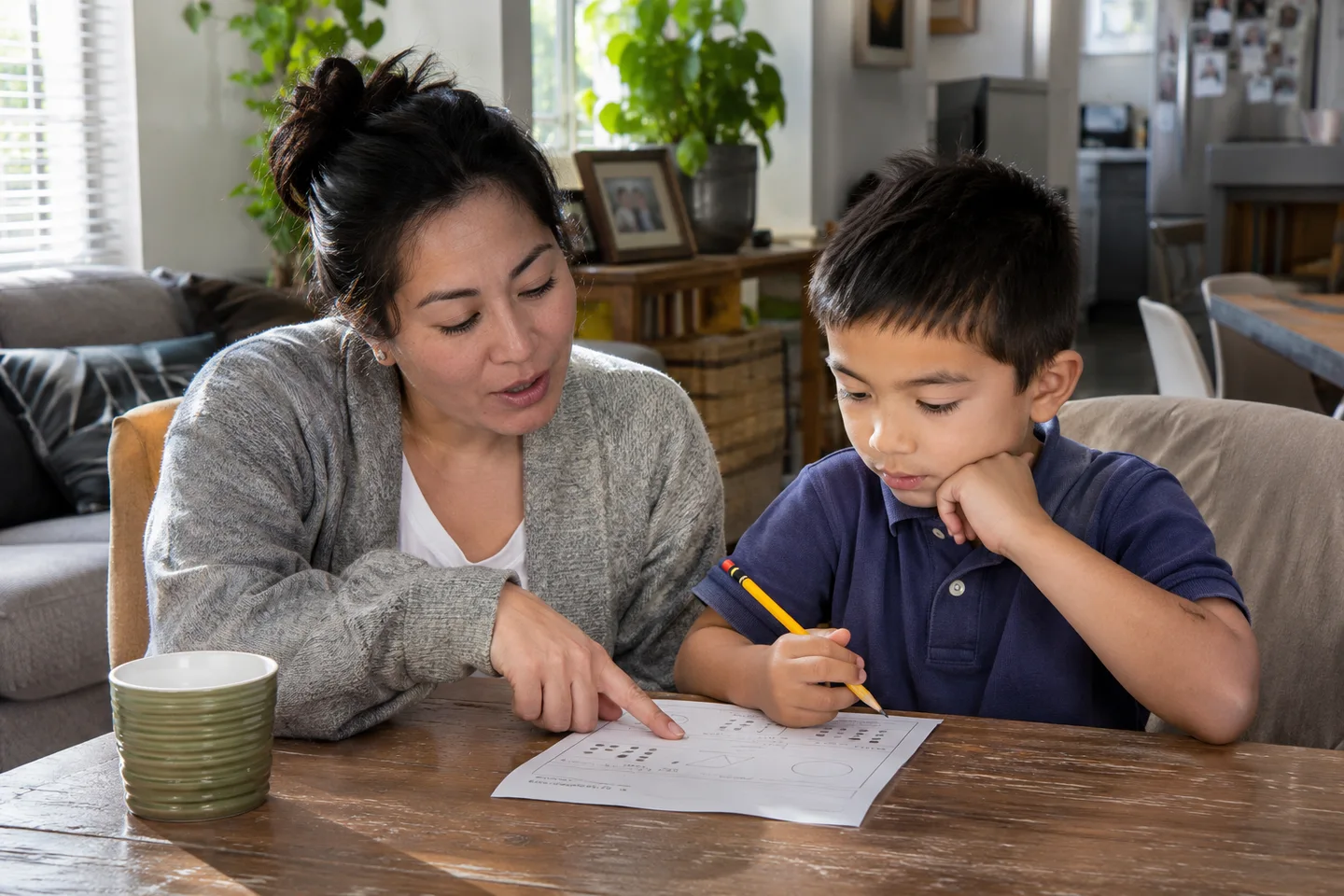
Locate the teacher's written instruction, school platform entry, or note that came with the task. Check that you are looking at the right page and date. If the child remembers an additional spoken direction, listen to it, but distinguish that memory from what is currently visible. Important details may need clarification through the school's normal route.
Avoid beginning with an adult assumption about what such worksheets usually require. Similar pages can have different purposes. Read the actual instruction before demonstrating a method or preparing materials. A minute spent checking the source may save a much longer session of completing something the teacher did not ask for.
Read the whole instruction once
Let the child read if they want and can do so comfortably. Offer to read aloud when decoding would use up the attention needed to understand the task. Reading assistance does not require giving away the answer. You can provide access to the words while leaving the decisions and responses to the child.
After the first reading, pause. Ask what the child thinks the task is asking. Accept an informal explanation. They do not need to repeat the sentence exactly. If the explanation differs from the instruction, return to the relevant words together. Keep the tone curious: “Let's see which part tells us that.”
If the child has a school provided support for understanding instructions, use it consistently with the guidance you have received. The home check should complement that support rather than replace it with a new method every evening. Ask the teacher about recurring unclear language or missing information, bringing a specific example. A precise question is more useful than a broad report that homework never makes sense.
Find the action word
Look for the word that describes what the child must do: draw, compare, explain, circle, list, or choose. Ask what that action would look like on the page. If the word is unfamiliar, provide a simple example using unrelated content. This clarifies the demand without completing the child's actual task for them.
Some instructions contain more than one action. “Read the paragraph and underline two reasons” includes reading, finding, and marking. Break the sentence into those parts orally or on a spare note. Do not add extra steps just because an adult would prefer a more elaborate result. The school task should remain recognizable after your explanation.
Notice the limit and the form
Words such as two, one sentence, each, or from the passage can change the job significantly. Ask where the instruction tells you how much to do and where the answer should go. A child might otherwise provide a correct idea in a form that does not respond to the task. Pointing out the limit helps them direct their effort.
Be careful not to turn every small instruction into a color coded analysis. A brief verbal check may be enough: “We need two examples, and they come from this paragraph.” Use marking or a short checklist only when it makes the task easier. The support should not take longer than the work it is meant to clarify.
Inspect examples without copying blindly
A worked example may show the expected format, but it can also create confusion if the child copies its content. Ask what the example demonstrates. Does it show where to write, how to label a diagram, or how much explanation is expected? Separate that feature from the particular answer used in the example.
If the example and the written instruction seem inconsistent, do not pretend the difference is obvious. Note the uncertainty and use the school's established method for asking. Depending on the circumstances, the child may be able to attempt the clear part and record a question about the rest. Avoid inventing an authoritative interpretation you cannot support.
Prepare only the materials the task needs
Once the instruction is understood, gather the required book, paper, and tools. Check whether the task refers to a passage, picture, or earlier page. A missing source can make an instruction impossible to follow, and a child may interpret that difficulty as not understanding the subject. Finding the source is part of preparing the task.
Keep the work surface manageable. Materials not needed yet can stay in a box or folder. This reduces the chance that an attractive coloring tool or unrelated page redirects attention before the child begins. Explain the choice practically, without suggesting that the child must work in an empty room to concentrate successfully.
Let the child choose the first action
Ask, “What will you do first?” rather than taking over with a long sequence of directions. If the answer fits the instruction, let them begin. If it does not, return to the relevant words. One focused prompt is often more useful than narrating every movement while the child works.
Step back once the task is underway. The instruction check is a starting support, not permission for an adult to supervise every answer. Be available for questions and notice when the child returns to the instruction independently. That action shows they are using the source to guide their own work, even if the subject matter still needs effort.
Use a final check that belongs to the task
At the end, reread the instruction together if needed. Did the child perform the requested action, provide the required number of examples, and use the specified source? This is different from an adult correcting every answer. Keep the check focused on whether the response addresses the job that was set.
If something is missing, ask the child what they want to revise. Avoid erasing and rewriting without permission. They should be able to understand the change and remain responsible for their work. When uncertainty concerns the content rather than the instruction, encourage them to show their thinking and bring an honest question to the teacher as appropriate.
Reduce help as the process becomes familiar
A child may eventually use three simple questions: What am I doing? What do I need? How will I know this task is finished? Keep those questions available on a small card if useful, but remove the card when it becomes unnecessary. The aim is a usable habit, not permanent dependence on an adult designed routine.
Some assignments will still need discussion, and that is normal. Clear instruction reading cannot remove every difficulty in learning. It can help separate the demand of the task from the subject itself, making questions more precise. Instead of “I cannot do this,” a child may be able to say, “I understand the comparison, but I do not know where the second example comes from.”
That kind of specific question gives the next helper something useful to work with. Notice it without exaggeration, and keep a brief record if clarification is needed later. A calm start and a task related finish can protect a child's effort, especially when the assignment is short enough that misunderstanding the instruction would otherwise take more time than completing the intended work.
For general educational information. Adapt ideas to your family and consult a qualified professional for individual concerns.