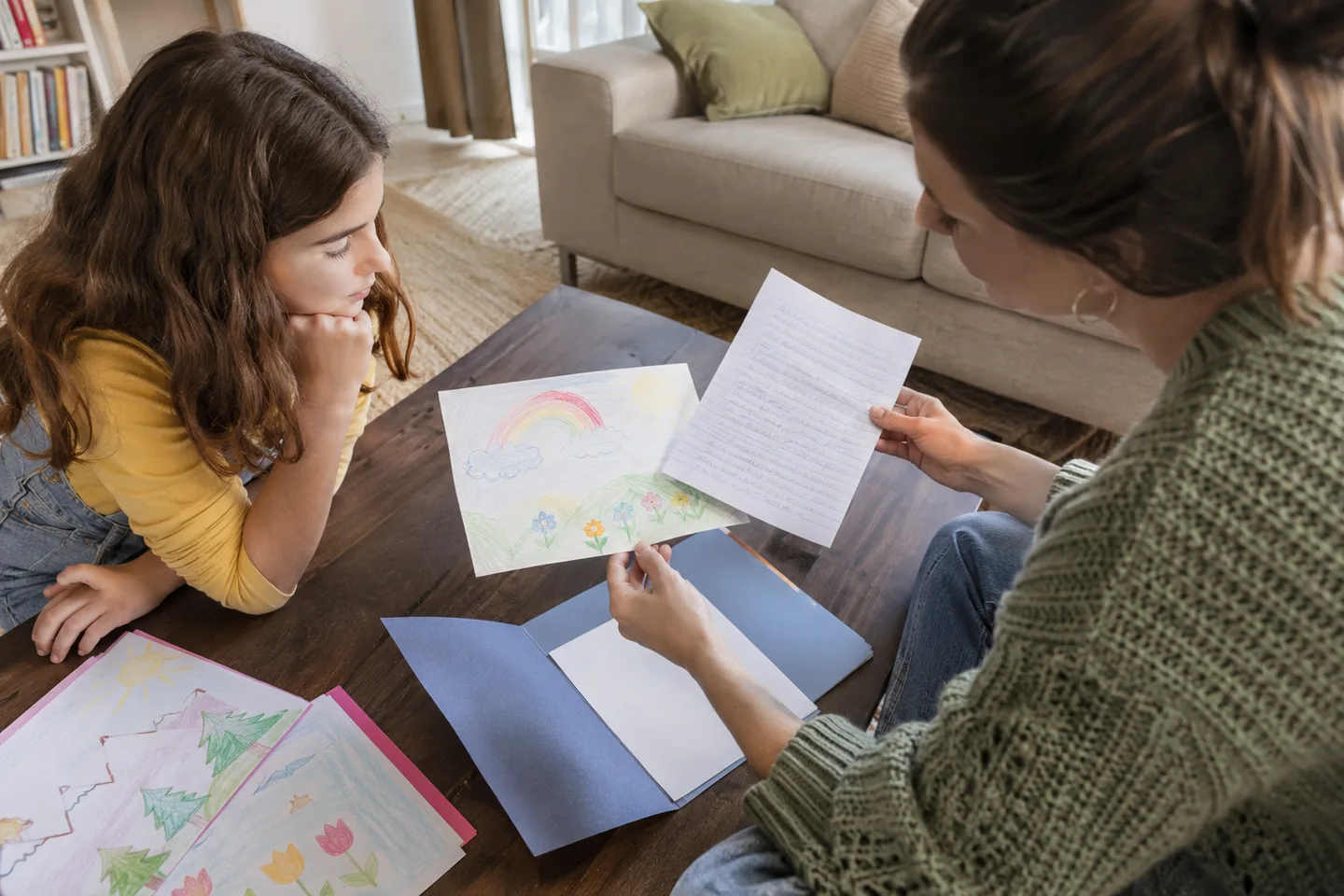
A drawing, a short note, and a photograph of a block structure can tell more about a child's learning than a large stack of saved paper. A small home portfolio gives selected work somewhere to live and, more importantly, a reason to be discussed. It is not a second report card or a display of only the neatest results.
The child should have a meaningful role in choosing what goes inside. A page may matter because the idea was difficult, the process was enjoyable, or the child wants to return to it. A portfolio becomes useful when it preserves those reasons alongside the object. Without that context, even a carefully organized folder can become another pile nobody opens.
Give the folder a limited purpose
Choose a simple aim: keeping a few examples of things the child wants to remember from learning at home. This might include reading responses, drawings, invented games, or practical projects. Explain that the folder does not need to contain every piece of schoolwork. Keep school records and important notices in their own adult managed places.
Use an ordinary folder, large envelope, or small box suited to the materials. Avoid heavy binders or complicated filing systems if they make access difficult. Keep it where the child can use it safely. If photographs are included, store and share them privately according to your family's normal preferences, without posting personal information as part of the activity.
Start with one piece and one reason
Invite the child to choose something recent. Ask why they want to keep it. Their answer may be short: “I liked the roof,” or “This was the first time my game had rules.” Write the explanation in their words if they want help. A sentence can preserve meaning that the finished object does not reveal.
Do not steer the child automatically toward the most polished work. An unfinished plan may have more to say than a tidy final drawing. If you want to suggest an item, explain your reason and leave room for refusal. The portfolio should represent the child's interests as well as the adult's observations.
A short voice note kept privately can preserve the child's explanation when writing it down interrupts the conversation. Ask permission and let them listen if they want to. Label it clearly enough to match the saved piece, then delete it when it no longer serves a purpose. Recording is optional; an adult written sentence is often the simpler and more manageable choice.
Add enough context to make it understandable later
A date, a title, and a note about the task are usually sufficient. If the work followed an instruction, keep a short description of that instruction. Otherwise a later viewer may misunderstand what the child was trying to do. A deliberately simple drawing, for example, may have been a map rather than an attempt at realistic illustration.
Record assistance honestly. “An adult wrote the words I dictated” or “We built the base together” clarifies the process without diminishing the child's contribution. Avoid attributing adult work to the child. The folder is most useful when it helps everyone remember what actually happened and which decisions belonged to whom.
Preserve process when the object cannot be kept
A large cardboard structure or a temporary block arrangement may not fit in the folder. A drawing, a dictated description, or a private photograph can stand in for it. Ask the child which feature they want to remember. A close view of one connection may be more meaningful than a wide picture of the whole room.
Keep identifying details out of images intended for any sharing beyond the household. There is no need to include faces, addresses, school names, or other personal information to show a project. The default purpose is private reflection. A portfolio does not need an online audience to make the work feel worth remembering.
Keep revisions beside earlier attempts
When a child changes a plan or rewrites a short piece, consider keeping both versions for a while. Ask what changed and why. They might have added a clearer label, widened a bridge opening, or shortened a game rule so another person could follow it. Those decisions make development visible in a concrete way.
Avoid presenting every later version as automatically better. An earlier drawing may have a quality the child still prefers. Compare specific features rather than ranking the whole page. “This version shows where the entrance is” is more useful than “You are much better now.” The conversation can acknowledge improvement without erasing the value of earlier ideas.
Review a few items at a time
Choose a calm moment and let the child open the folder. Three pieces are enough for a short review. Ask what they remember about making each one and whether the original reason for keeping it still matters. Some items will prompt a story; others may have lost their interest. Both responses are useful.
Do not turn the review into an oral examination. If the child cannot remember a detail, look at the note or leave the question open. The folder is there to support memory, not test it. An adult can share an observation, but leave space for the child's account even when it focuses on something different from what you noticed.
Notice strategies rather than fixed labels
Look for actions the child can recognize: checking a measurement, asking a question, trying another arrangement, or explaining a rule to someone else. Describe one example and ask whether they remember using that approach elsewhere. This connects the saved piece with something they can choose to do again.
Avoid conclusions about talent, intelligence, or developmental standing based on a small collection. A home folder is selective and shaped by opportunity, interest, and adult support. It is not an assessment instrument. If there are concerns about schoolwork or development, use the appropriate professional or school discussion rather than treating the portfolio as evidence that settles them.
Let old work leave the folder
Set a practical limit, such as the amount that fits comfortably in a slim folder. Review before it becomes overfull. The child can keep a favorite, replace something with a note or photograph, or recycle work that no longer matters. Ask before discarding pieces they have chosen, even if the adult sees them as ordinary scraps.
This selection process is part of the purpose. Keeping everything can make it difficult to see what the child values. A small collection invites decisions about what represents an idea or an experience. It also respects the space limits of the home, where storage needs to serve several people and activities.
Use the folder to open a next step
After looking back, ask whether there is anything the child wants to revisit. They may want to rebuild a model with a wider base, write another invitation, or make a new map. A next step should come from a real interest, not an adult expectation that every reflection must produce a goal.
Sometimes the child will simply close the folder and return to play. That is a reasonable ending. The portfolio has already offered a chance to remember decisions and see a few pieces of work together. Kept small and used gently, it can preserve the meaning of learning at home without turning family life into a continuous record of performance.
If another family member looks through it, invite them to ask about a specific piece rather than offer general praise for the entire collection. The child can decide what to show and what to explain. A genuine question about a drawing or a game rule gives the saved work an audience while leaving the child in control of the story attached to it.
For general educational information. Adapt ideas to your family and consult a qualified professional for individual concerns.