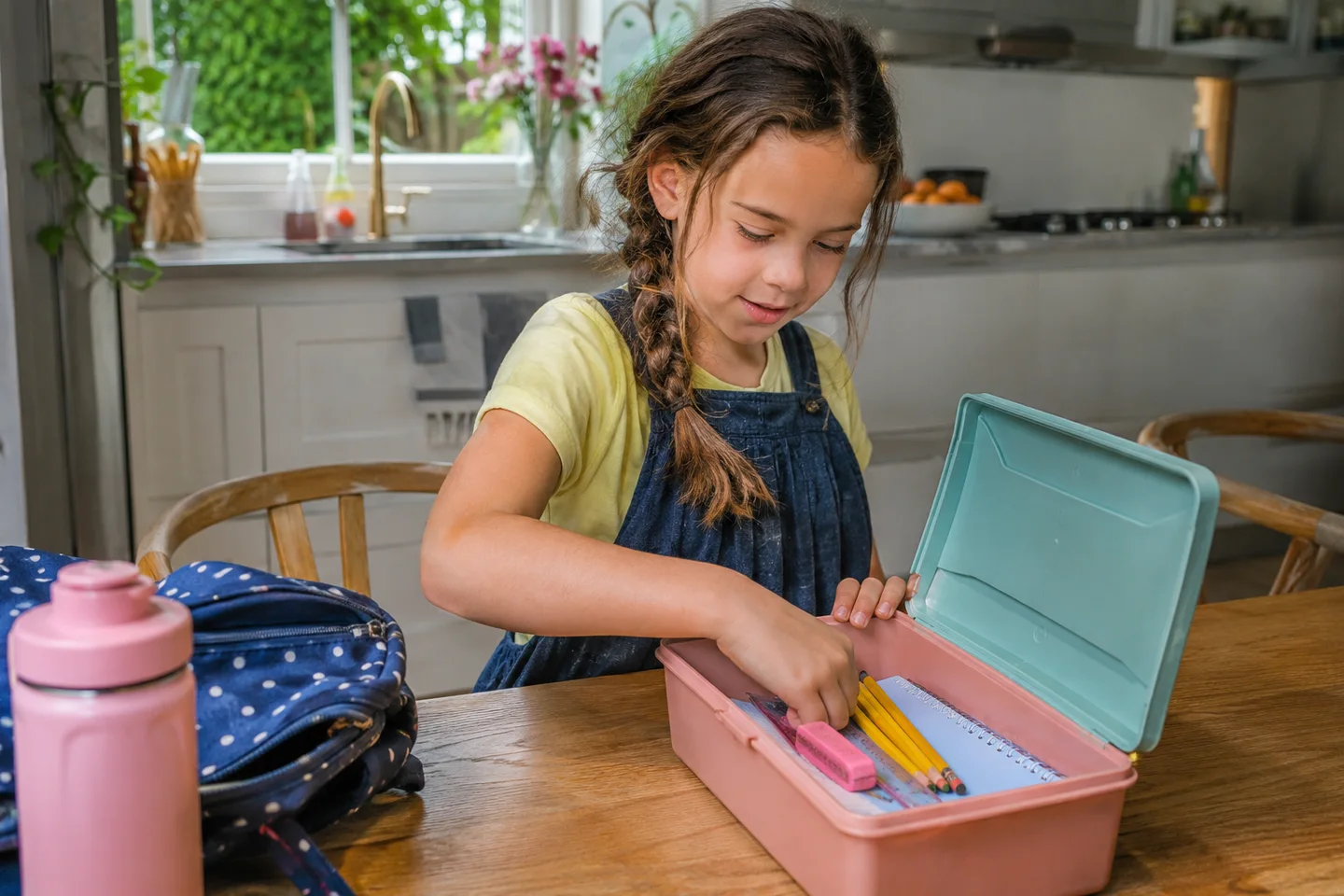
The pencil is in a drawer, the ruler is under a drawing, and the eraser seems to have left the house. None of these is a large problem alone, but together they can make a short homework task feel difficult to start. In a home without a dedicated desk, a small supplies box can remove some of that practical friction.
The box is not a solution to every homework difficulty. It cannot explain an unclear assignment or make an unsuitable workload manageable. What it can do is keep ordinary materials available and make the beginning and end of a work session more predictable. Start with what the child actually uses, rather than assembling a miniature stationery shop.
Observe one week of real tasks
Notice which supplies are requested during ordinary schoolwork. A pencil, eraser, ruler, and a few colored pencils may cover most tasks. Add other items only when they have a clear purpose. Keep sharp tools, small pieces, and materials unsuitable for younger children under appropriate adult control. Follow the school's guidance where particular equipment is required.
Ask the child which searches interrupt them most often. They may name a sharp pencil or a place to keep loose paper. Their answer helps identify the smallest useful change. Avoid buying a large organizer before you know what needs organizing. A clean, sturdy container already at home may work well enough to test the idea.
Choose a box that is easy to move
The container should fit the supplies without being too heavy or crowded. A lid can be useful, but only if the child can open and close it comfortably. Check for sharp edges, damaged hinges, or loose parts. Store the box where the child can reach it safely without climbing or moving heavy objects.
Think about the route to the work surface. If the box must be carried through a busy room, keep it light and easy to hold. A simple tray may be better for some children, while a lidded box suits a table that changes purpose frequently. The right choice is the one that makes setup and return straightforward in your home.
For a child moving between households or work spaces, agree where the box belongs and which supplies travel. A short note inside the lid can help everyone return borrowed items. Keep the note factual and easy to update. The arrangement should make transitions simpler without asking the child to manage disagreements between adults or remember materials that another person has removed.
Give each item an obvious place
Use a small internal cup or a simple divider only if it helps. Too many compartments can make putting things away slower than using them. A broad section for writing tools and another for the ruler and eraser may be enough. Let the child arrange the contents, then try finding each item without emptying the whole box.
Avoid elaborate labels for a tiny collection. A picture or a single word can help a younger child, but the arrangement itself should be understandable. If supplies repeatedly end up in the wrong place, ask whether the categories make sense. The child should not need an adult to interpret the system every time homework ends.
Keep paper and instructions connected
A supplies box can hold a slim folder for the current task if space allows, but do not let it become a permanent store for every school paper. Choose one place for work in progress and another adult managed place for notices needing attention. Explain the distinction. Losing the instruction sheet can be more disruptive than losing a pencil.
At the start of a session, find the assignment and read what is needed before spreading materials across the table. The child can then choose the relevant tools. This keeps the box useful as a resource rather than a pile that must be unpacked in full. Leave unused items inside until they have a job.
Prepare a workable surface
Clear enough table space for the task and the child's arms. Check light, seating, and the position of the book or paper. Keep food and drinks where they will not spill onto the work. A portable box helps only if the surrounding setup is usable. There is no need for a special desk if the shared table can provide a comfortable temporary surface.
Tell other household members when the space is needed and for roughly how long. Keep that agreement realistic. If the table must be used for dinner, plan where unfinished work can go. A folder and the supplies box can make the changeover easier without requiring the child to remember which loose sheet belonged to which task.
Distinguish missing materials from unclear work
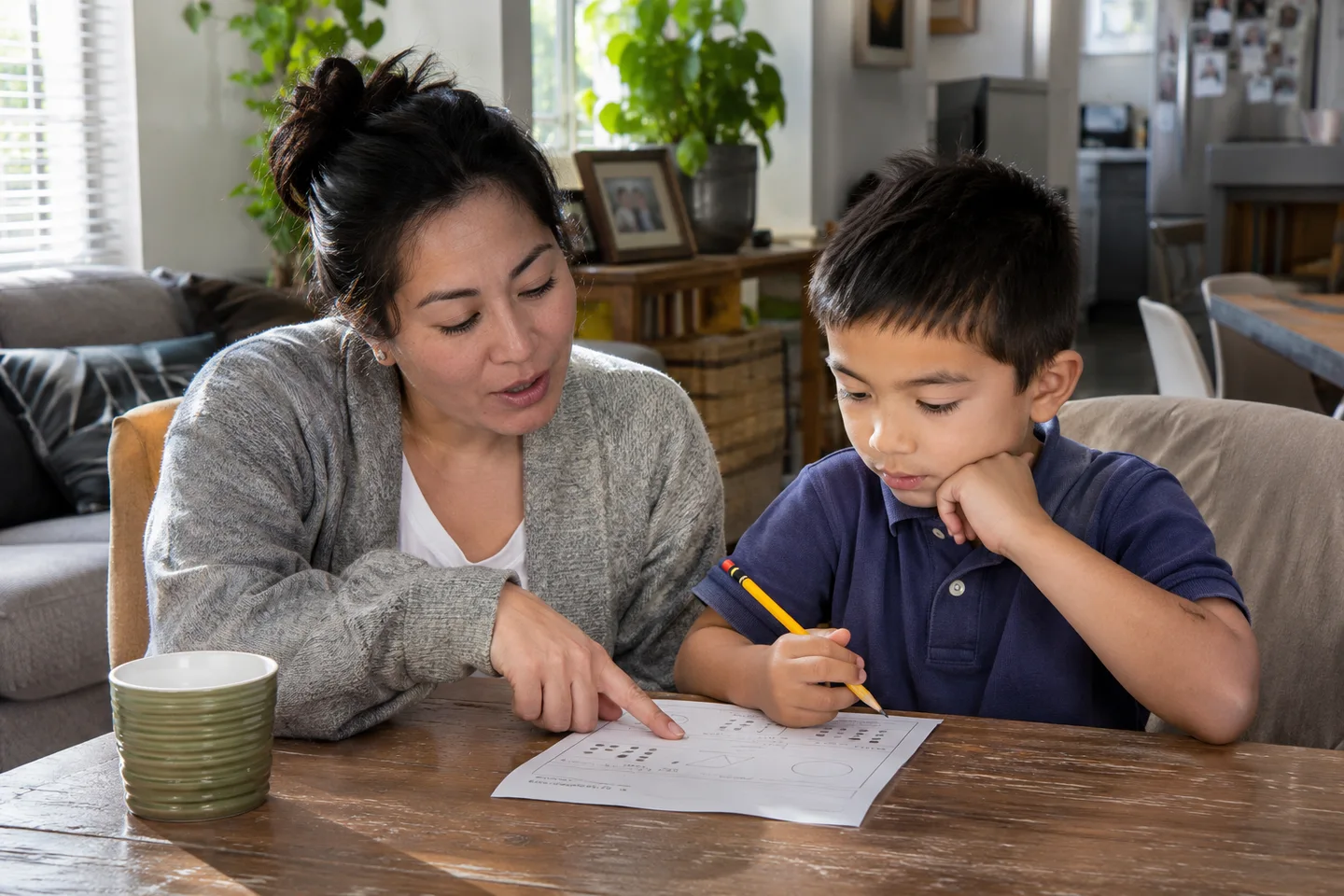
If the child still struggles to begin, ask what part is difficult. They may not understand the instruction, may need a break, or may be worried about a particular question. Do not assume the organized box proves that every remaining problem is unwillingness. Practical preparation removes one obstacle and may make another easier to see.
When the task is unclear, review the school instruction together and note what information is missing. Use the school's normal communication route if clarification is needed. Avoid inventing requirements simply to get something completed. The box supports schoolwork; it does not replace the teacher's explanation or the child's opportunity to ask a genuine question.
Let the child manage a short check
Before work begins, invite the child to check that a usable pencil and the required tools are present. Keep the check brief. If a pencil needs sharpening, use an age appropriate method with supervision as needed. An adult should handle any equipment or blades unsuitable for the child. Replace worn or damaged supplies when practical.
At the end, return the tools and put the current work in its agreed folder. A two minute reset is easier than a large weekly rescue of scattered stationery. If the child is exhausted, share the job rather than making the reset a final confrontation. The goal is a useful starting point next time, not a perfect closing ceremony.
Prevent the box from becoming general storage
Small toys, receipts, broken crayons, and unrelated papers can gradually fill the container. Review it occasionally with the child. Remove things that have another home, discard unusable items appropriately, and keep the supplies needed for current tasks. Do not quietly throw away treasured objects the child has placed there; discuss where they should go instead.
If another family member borrows a tool, make returning it part of the household agreement. A child's organizer cannot stay dependable if adults treat it as an untracked supply cupboard. Keep shared extras elsewhere if necessary. Responsibility is easier to learn when the people around the child follow the same practical expectations.
Judge the change by reduced searching
After a week, ask whether starting work feels easier and whether the box contains what the child reaches for. Remove an unused item or add one repeatedly requested supply. If the container is awkward, change it. The purpose is to reduce effort around the task, not to defend an organizational idea because an adult spent time on it.
A successful homework box is usually unremarkable. It comes to the table, provides a pencil or ruler, and returns to its place. That ordinary dependability can be valuable in a room with several uses. The child has fewer things to search for and a clearer way to begin, while the table can still return to the rest of family life afterward.
Consider keeping a small adult backup supply elsewhere rather than filling the child's box with duplicates. When something runs out, replace it together and notice the reason. This keeps the working collection compact while showing that materials need occasional maintenance. The child can participate in that maintenance without being expected to anticipate every need or manage household purchases independently.
For general educational information. Adapt ideas to your family and consult a qualified professional for individual concerns.