A folded picture becomes more interesting when it has somewhere to go. A pretend post office gives children a reason to make a message, decide who it is for, and arrange for it to arrive. The writing can be a scribble, a drawing, a copied name, or a sentence dictated to an adult. The important feature is that another person receives it.
You can set up the whole activity on one end of a table. A clean shoebox, a few large pieces of paper, crayons, and two delivery places are enough. The post office can open for ten minutes, close for lunch, and fit back into its box. It does not need to take over a shared living room.
Prepare the box together
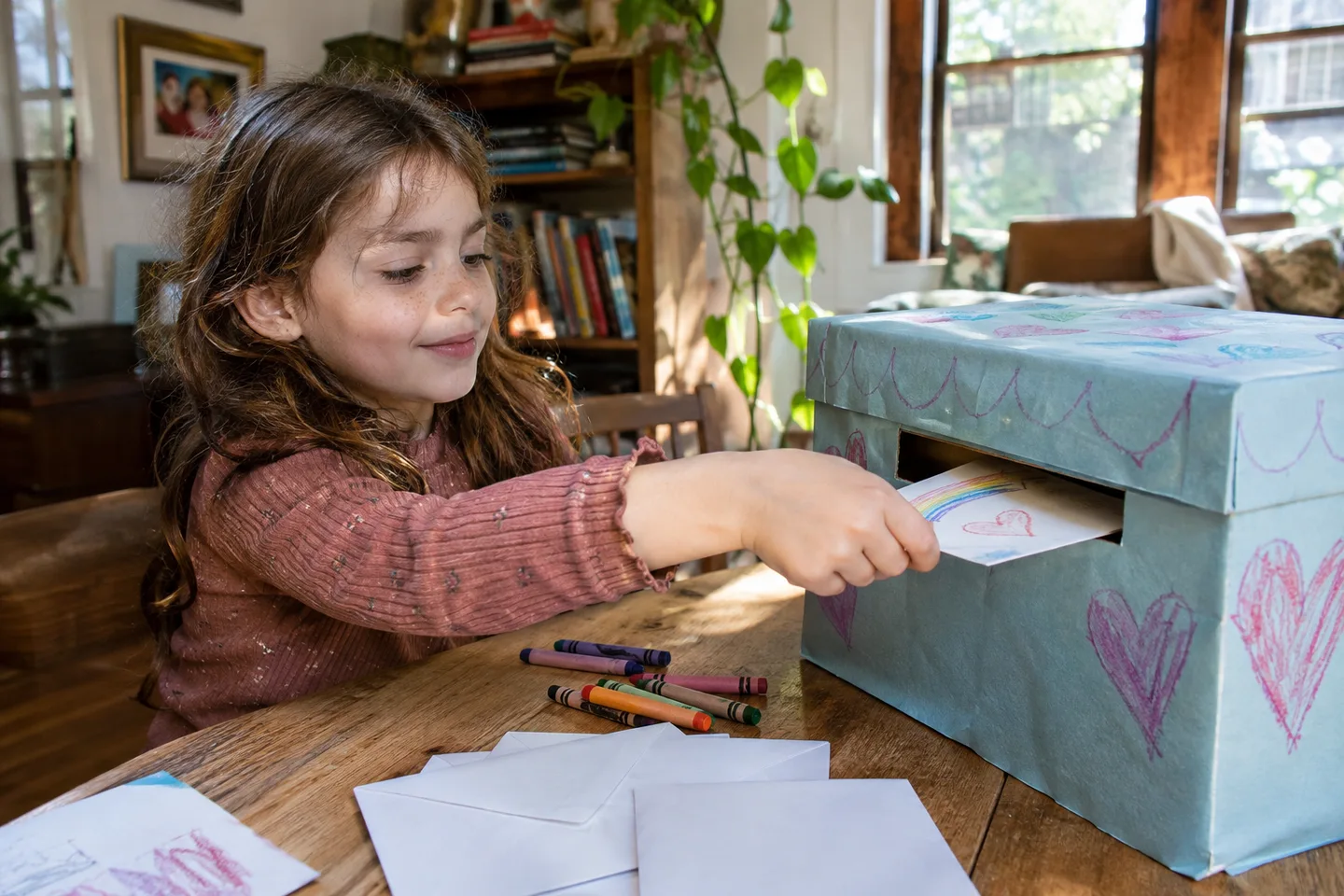
An adult should cut the mail slot before play begins and check that the opening has no rough edges. Remove staples, loose decorations, or damaged parts. Use a plain box that has not held anything unsuitable. Children can decorate the outside with crayons while the adult handles any cutting or other tasks needing sharper tools.
Leave the slot wide enough for folded drawings to pass through easily. A narrow slot can turn every delivery into a frustrating struggle. If cutting a box is inconvenient, use an open basket as the collection point. The game depends on sending and receiving messages, not on how closely the container resembles a real street postbox.
Give the message a recipient
Start by sending something to the child. Draw a simple picture, fold it, and say who it is for. Add their name if they recognize it, or use a familiar picture symbol agreed together. Place the message in the box and ask how it might reach them. This creates a problem the child can help solve.
Then invite a reply without requiring one. A child might draw a cat, choose a colored paper, or ask you to write “Come and see my tower.” Accept the form they choose. If you write dictated words, read them back exactly enough for the child to check that the message says what they intended.
A simple collection record can help a child who enjoys the organizing side of play. Draw a box for each destination and add a mark when its mail is collected. Compare the record with the messages still waiting. If the two disagree, check the box together. The record is useful only when it helps someone decide what remains to deliver.
Make two clear delivery places
Choose destinations inside the room, such as a chair for one person and a low table for another. A large card with a name or picture can identify each place. Keep the route clear of trip hazards and avoid putting messages on stairs, near hot appliances, or anywhere children would need to climb to retrieve them.
The first delivery round should be easy. Two messages and two destinations are plenty. If your child takes both to the same place, ask how the carrier could tell them apart. Perhaps the destination cards need matching symbols. The practical difficulty creates a reason to improve the system without calling the child's effort wrong.
Let marks carry meaning
Early writing often looks different from adult writing. A line of loops may stand for a whole invitation. Ask your child to read the message to you, and listen without replacing it immediately with conventional letters. You can offer to add a small adult note underneath if the child wants another person to understand it later.
When a child asks how to spell a word, respond to that request rather than turning the whole letter into a spelling exercise. You might write the word on a spare card for them to copy, say the sounds together, or offer to be the scribe. The message should remain theirs, including its purpose and tone.
Introduce the work of sorting mail
Once there are several messages, ask the carrier to group them by destination before delivering. Use shallow trays or marked spaces on the table. Count how many messages each place will receive. If the child enjoys this part, add a third destination. If it becomes confusing, return to two and make the labels clearer.
Some mail may be incomplete. A folded paper with no recipient creates a useful mystery. Ask what information is missing and who could supply it. Do not require the child to guess successfully. The sender can add a name or symbol. This shows that communication sometimes needs a repair before it can work.
Add time without making it a race
A small sign can say when the next delivery round begins. For children who do not read clocks, connect it to an event such as after the books are put away. Explain that the box can collect messages until then. Waiting has a visible purpose because someone will gather and deliver the mail at an agreed point.
Avoid timed races around the room. Speed can make a crowded home less comfortable and shift attention away from the messages. A calm carrier can check each destination and return with replies. If two children want the role, agree on a turn system or let one collect while the other delivers, then swap.
Keep the play kind and private
Make a simple rule that messages should be suitable for the person receiving them. A silly drawing can be fun, but a note designed to upset or exclude another child changes the game. Help children rewrite a request clearly or invite someone into the play. Adults can model friendly invitations without requiring exaggerated praise or affection.
Use pretend names and home destinations during play. There is no need to write real addresses, telephone numbers, or other private details on papers that may be photographed or shared. If the activity inspires interest in real mail, discuss that separately with an adult responsible for the practical details and personal information.
Offer fresh purposes for another day
The post office can carry invitations to a toy picnic, a request to borrow a book, or a drawing showing where a missing toy was found. Each purpose asks something slightly different of the sender. An invitation needs enough information for someone to join in. A request should make clear what the sender hopes will happen.
For an older child, introduce a return address within the pretend system, such as “blue chair.” Ask how the recipient could reply. Another extension is a delivery record with a simple mark beside each completed destination. Keep these additions optional. Children do not need to complete an adult designed sequence before the game counts as worthwhile.
Close the post office properly
At closing time, deliver any remaining messages or tell the senders when they will be delivered. Store spare paper and crayons in the box, with adult tools put away separately. Ask the child which message they would like to keep. The rest can be recycled when everyone is ready, rather than saved indefinitely.
A small post office works because it makes the reader visible. A child sees a person open the paper, understand the idea, and respond. That exchange gives marks on a page a job. Tomorrow's post may be no more elaborate than a drawing passed across the table, but the child has already experienced how a message can travel beyond its maker.
You can revisit one delivery together before packing up. Ask whether the recipient knew what to do when the message arrived. If an invitation lacked a place or a drawing needed an explanation, add that information with the child's permission. The aim is to make the communication more useful while preserving the sender's own idea. Even a tiny revision can make the next exchange feel more satisfying.
For general educational information. Adapt ideas to your family and consult a qualified professional for individual concerns.