The interesting part of a collage is usually the pile of paper, not the discussion about glue on the table. Yet that discussion often arrives halfway through the project, just as a child is deeply involved. A short agreement beforehand can protect both the activity and the space where the family needs to live afterward.
A mess agreement is not a promise that nothing will spill. It is a clear plan for what can happen, where it can happen, and what everyone will do when the project ends. It should be simple enough for the child to remember and realistic enough for the adult to uphold without hovering over every movement.
Decide whether today has room for the project
Look at time and space before offering materials. If dinner needs the table in twenty minutes, a large wet painting may not be the best choice. Offer a dry drawing activity or explain when painting could happen. It is easier to set a practical limit before the child begins than to withdraw permission after they have invested effort.
Children can hear an honest constraint without a long justification. “We have this corner and fifteen minutes today” gives useful information. Offer a choice between two activities that fit. Avoid setting up something elaborate while secretly hoping the child will keep it unusually neat or finish much faster than they normally do.
Define the working surface
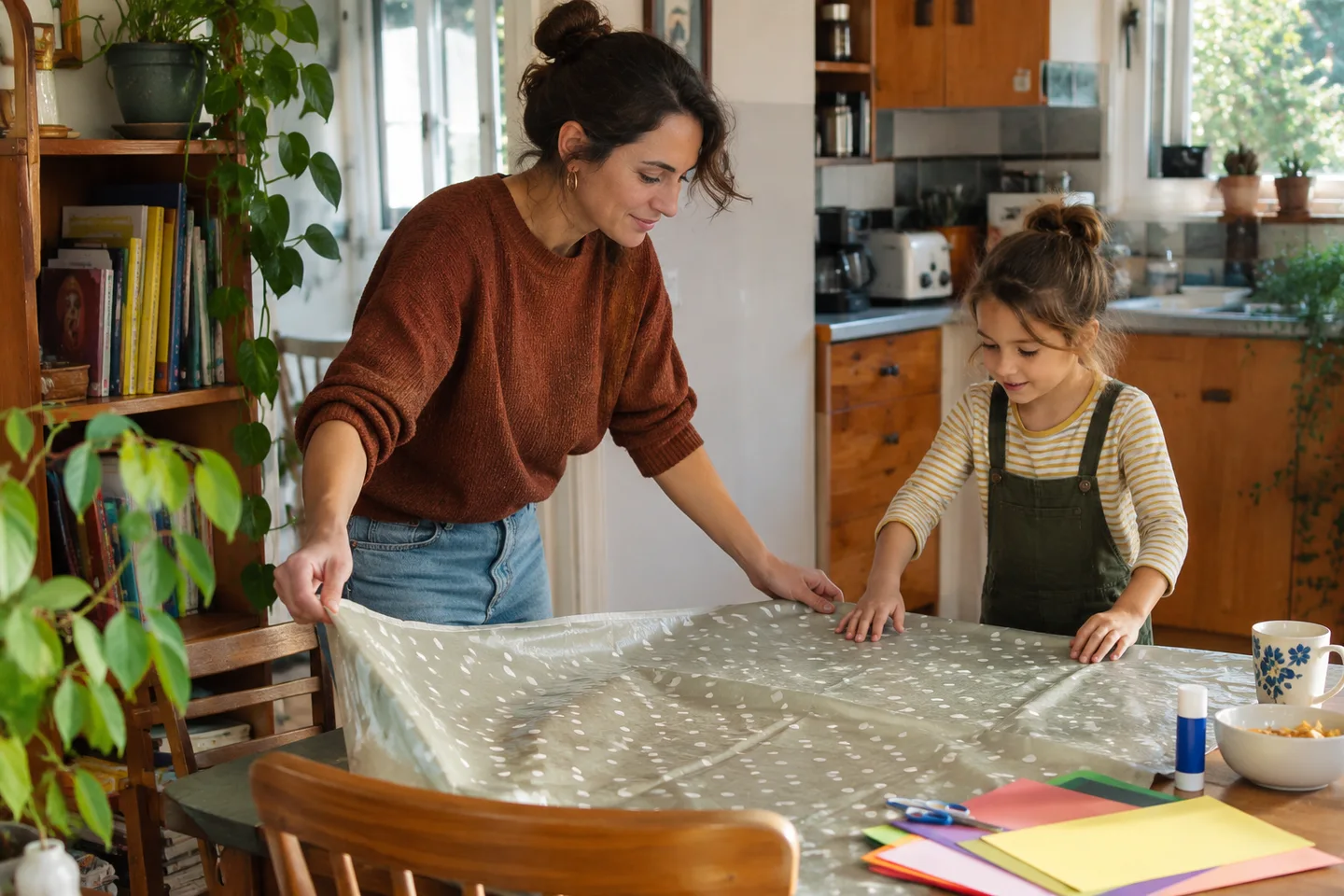
A washable mat or old sheet can make the permitted area visible. Check that it lies flat and does not create a slipping or tripping hazard. Use a stable table or floor area suitable for the materials. Keep exits and walking routes clear, especially when several people share the room.
Show the child the edge and explain what it means. “Glue stays over the mat. Finished pieces can dry on this tray.” Keep the plan positive and concrete. A general instruction not to make a mess leaves the child guessing which marks are acceptable, which materials can move, and where unfinished work should go.
Photographing the setup for private household use can make the next project easier to prepare. Show the clear surface, the small quantity of materials, and the place for drying work rather than presenting a staged finished craft. Keep the image free of personal information. Use it as a reminder for adults and children together, with room to change the arrangement when another material needs different handling.
Choose materials you can comfortably supervise
Use art supplies appropriate for the child's age and follow their labels. Keep sharp tools, small decorations, hot equipment, and anything unsuitable under adult control. Avoid using food containers that could confuse children about what is edible. A practical project does not need a large assortment of materials to be satisfying.
Offer small amounts first. A shallow portion of glue or a few sheets of paper reduces the consequences of a spill and makes the task easier to manage. Refill when needed. This is not about rationing creativity; it is about giving a child a quantity they can handle while keeping the remaining supplies clean and usable.
Agree on help before it is urgent
Show where a damp cloth or suitable wiping material is kept. Explain what the child can handle and when to call an adult. For example, a little water on the mat may be a shared wiping job, while a broken container requires the child to step back and let an adult manage it.
Make asking for help easy. “Tell me if something spills; we will deal with it” is more useful than threatening to end the project for every accident. Children are more likely to report problems promptly when they expect a calm response. That gives adults a better chance to prevent a small spill from becoming a larger practical problem.
Distinguish an accident from a limit
A child may accidentally drip glue beyond the mat. They may also deliberately spread it on the chair after being told where it belongs. Those situations call for different responses. In the first, help clean and adjust the setup. In the second, restate the limit and move the material if it continues to be used outside the agreed area.
Keep the response connected to the situation. “The glue needs to stay on the mat. I will hold the pot while you use the brush” preserves a way to continue safely. If the activity must stop, explain why briefly. Avoid turning the condition of the table into a judgment about the child's character or gratitude.
Let the project belong to its maker
Adults sometimes try to control mess by controlling every creative decision. That can produce a tidy result while leaving the child with little ownership. Once the materials and space are suitable, allow odd arrangements, thick lines, and unexpected combinations. A collage does not need to match a sample to be worth making.
Ask before improving the work. A large blank area may be intentional. Paper that seems crooked may represent something specific. “Would you like help attaching this?” gives the child a choice. If the request is simply for an audience, look and listen without adding suggestions. Protecting the room and directing the artwork are separate jobs.
Build a stopping point into the plan
Before starting, show where unfinished work can wait. A tray, drying area, or folder can prevent a rushed ending from damaging the project. Give a warning before cleanup begins, then name the next action. “Finish the piece you are attaching, and put the brush here” is easier to follow than “Stop making a mess.”
Some children need help moving from making to putting away. Join them for the first step rather than issuing directions from another room. You might collect unused paper while they close the crayon box. A shared start can make the changeover feel like part of the activity, especially when the creative work has absorbed their attention.
Divide cleanup into visible jobs
Use small actions with clear endpoints. Put caps on markers, return clean paper to its folder, wipe the mat, and carry the finished work to its place. Adults should handle cleaning products and any tasks unsuitable for the child. Do not hand over a whole room and expect the child to infer the sequence.
If the project was larger than expected, adjust the help rather than making cleanup a punishment. You can still uphold the agreement while acknowledging that the task needs adult support. Notice specific contributions: “You checked every marker for its cap.” That tells the child how their action protects materials for another day.
Review what the setup taught you
Afterward, consider the practical causes of trouble. Was the pot easy to tip? Was the mat too small? Did the warning come too late? Change one thing next time. A wider tray may solve a recurring spill more effectively than another reminder to be careful. The environment can carry part of the responsibility.
Ask the child what would make the next project easier to start or finish. They may want fewer supplies, a place to keep scraps, or more time to show the result before cleanup. A useful agreement can evolve. It is successful when it supports making, protects shared space, and leaves the family willing to try another project.
Keep a small record of the materials that worked well, perhaps on a note inside the art box. This can be as simple as “mat, paper tray, damp cloth, drying space.” The note is for the adult's convenience, not another checklist the child must perform. When setup becomes easier, there is more attention available for listening to the child and enjoying what they decide to make.
For general educational information. Adapt ideas to your family and consult a qualified professional for individual concerns.