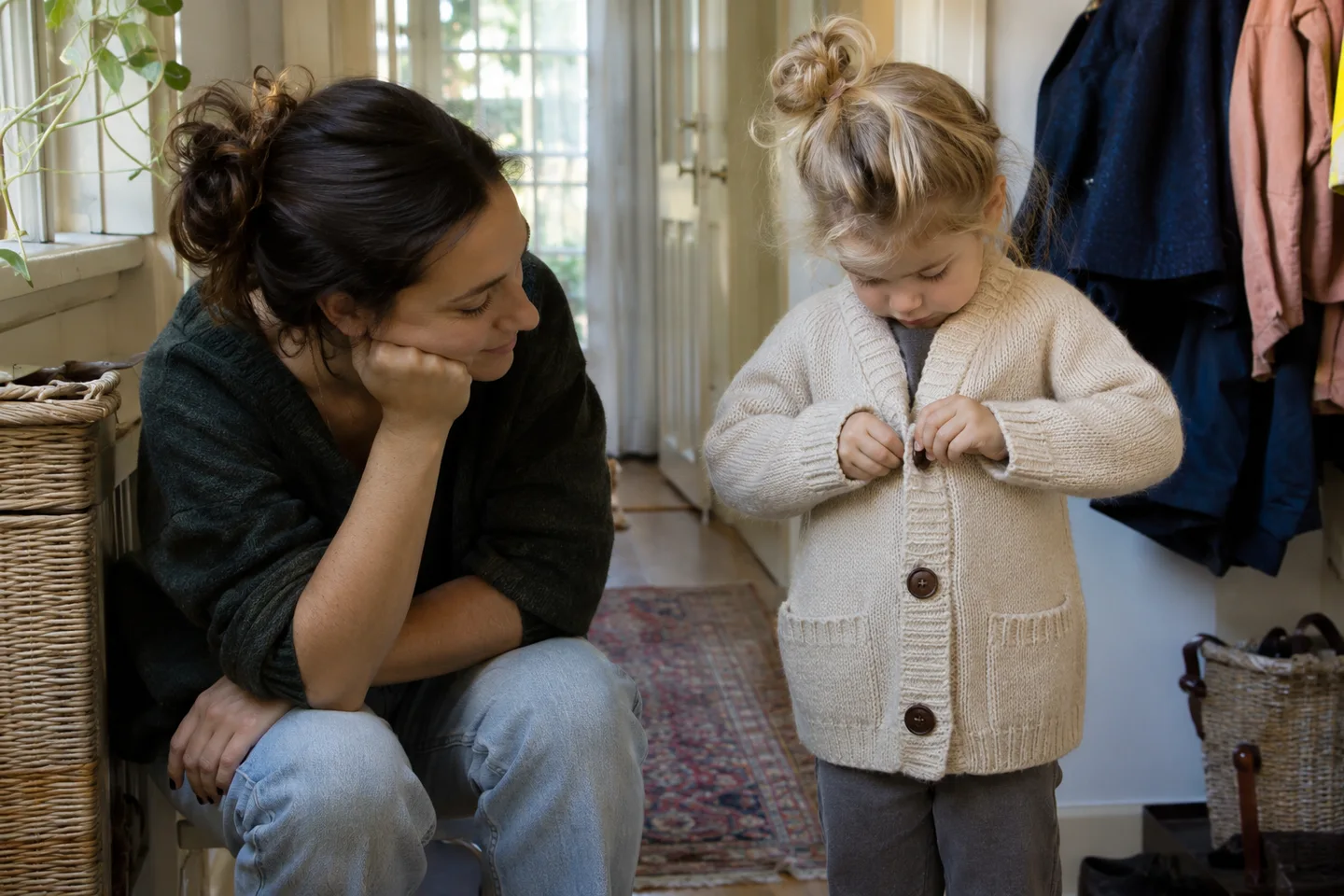
The cardigan is almost fastened. One button remains, and your child has pushed it halfway through the hole three times. Your fingers could finish the job in a second. Whether to step in depends on more than the button: how much time you have, how your child feels, and whether the task still offers a manageable challenge.
Helping without taking over is not a rule that adults must always stand back. It is a way of matching assistance to the problem in front of you. Some tasks call for direct adult action. Others need a smaller hint, a steadier surface, or permission to pause. The useful question is what kind of help leaves the child with a meaningful part to do.
Separate safety from practice
Adults remain responsible for tasks that involve hazards or require adult judgment. A child experimenting with a loose shoelace at a table is different from a child standing near traffic with an untied shoe. In the second situation, secure the shoe and move on. You can offer practice later in a place where there is time and space.
Explain this distinction plainly. “I am fastening this now because we need to move away from the road. You can practise when we get home.” That explanation does not turn necessary help into a failure. It also prevents a well intended commitment to independence from becoming an excuse to leave a child in an unsafe or unmanageable situation.
Ask before your hands enter the task
When the situation is safe, try a brief question: “Would you like a hint, a hand, or more time?” A younger child may need just two options. Keep the choices genuine. If you cannot wait because you must leave, say so and arrange a small part they can still complete, such as the final button.
A child who says no to help may still appreciate company. Sit nearby without commenting on every move. If they later ask for assistance, respond without “I told you so.” Asking for help is useful information about what they need. It should not carry a social cost that makes them reluctant to ask next time.
Find the smallest obstacle
Watch where the task breaks down. Is the child unable to see the buttonhole? Does the fabric slide away? Are their hands tired? The answer may be environmental rather than instructional. Bringing the cardigan onto the table or choosing a larger button for practice can make the task possible without changing who does it.
Describe one observation instead of offering a stream of directions. “The hole is folding under the fabric” points to a problem the child can examine. If they want a demonstration, show one slow movement on a different button, then return the garment. Demonstrating every step on the child's actual work can quietly leave nothing for them to attempt.
Offer help in layers
A useful first layer is attention: look together at the troublesome part. Next might come a question or a verbal hint. After that, you might steady the material while the child moves the button. Directly completing the step is another option if the task remains too difficult. These are choices, not a mandatory ladder every child must climb.
Move back when the help has done its job. If holding the fabric allowed the child to find the opening, ask whether they want you to keep holding it. Avoid assuming that assistance must continue through the entire task. The point is to give access to the next workable action, then see what the child can manage.
Make practice different from departure time
Busy mornings are often poor conditions for learning an awkward skill. Set aside another moment when the garment can lie on the table and nobody is waiting at the door. Keep practice brief and optional enough that it does not feel like a penalty for needing help earlier. One or two attempts may be sufficient.
You can acknowledge practical limits without shame. “There is time for one try, then I will finish so we can leave.” A clear boundary is kinder than pretending to wait patiently while showing increasing irritation. Children can understand that family schedules sometimes shape the amount of practice available, especially when they also get calmer opportunities elsewhere.
Notice effort with useful detail
Instead of calling a child brilliant for finishing, describe what changed. “You held the hole open with your other hand” gives them information they can reuse. If the attempt did not succeed, you can still notice a strategy: “You turned it around to see the back.” This keeps the conversation connected to actions rather than fixed personal qualities.
Avoid praising endurance regardless of how the child feels. Continuing past exhaustion or distress is not the aim. A pause may be a sensible decision. You might say, “Your hands look tired. Shall we put this aside and use the zip today?” Flexibility is part of solving everyday problems, alongside persistence.
Handle frustration without taking the task hostage
A child may push the garment away or say they cannot do it. Begin with the immediate feeling: “That button has been difficult.” You do not need to persuade them instantly that they are capable. Offer a short break, a smaller attempt, or shared completion. Keep your voice ordinary rather than turning the moment into a motivational speech.
If frustration affects other people or objects, set a clear limit while preserving options. “The cardigan can stay on the table. I will move it if it gets thrown.” Then help the child settle before deciding what happens next. The task should not become a contest over whether the adult or child controls the final button.
Use the same idea beyond clothing
The smallest useful help may look different elsewhere. During a puzzle, it could mean turning pieces picture side up. With a drawing, it might be finding a pencil that makes a darker mark. When packing a bag, it may be reading the list aloud while the child locates each item. In each case, keep the main decision visible.
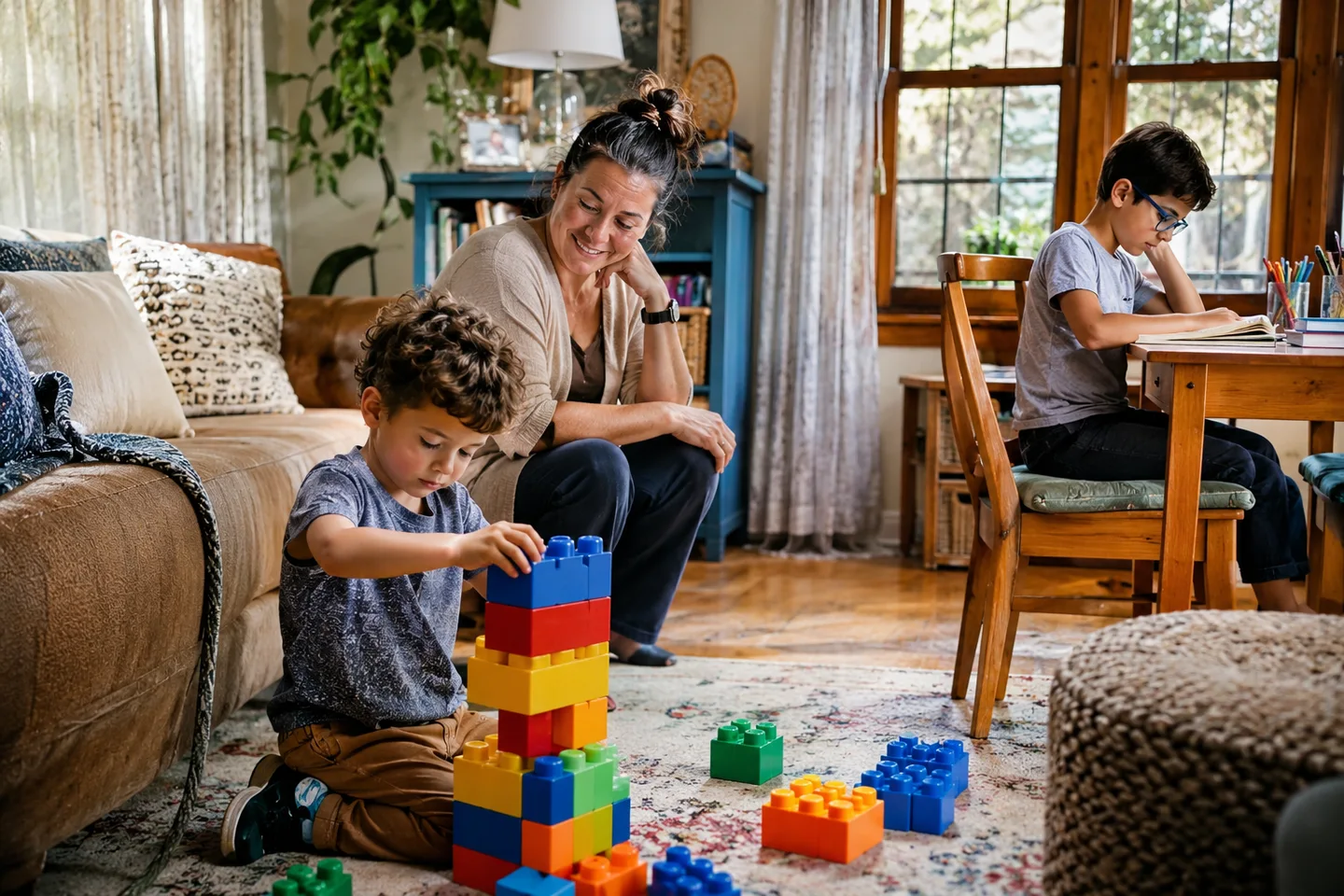
Check that you have understood the child's goal before improving the result. A leaning block tower might be a bridge under construction, not a tower that needs straightening. An adult can accidentally erase an interesting plan by making it neater. “Tell me what you are trying” often saves more time than stepping in with the wrong solution.
Let completion remain ordinary
When the task is finished, there is no need for a large celebration unless the child wants one. Return to the activity the skill supports: wearing the cardigan, carrying the bag, or playing with the finished structure. Everyday competence is useful partly because it makes other things possible. The button does not need to become the whole story.
You can review the support later with a simple question: “Was holding the fabric helpful?” The answer may change next time. A child might need more assistance when tired and less when rested. Paying attention to those differences makes help responsive. It lets independence grow through ordinary shared tasks, without treating either asking for help or accepting it as a setback.
Adults can also repair an overstep. If you finish something too quickly, acknowledge it directly: “You were still trying, and I took it from you. Would you like another turn?” You cannot undo every rushed moment, but you can return control where possible. This small repair demonstrates the same flexibility you hope the child will use when a plan needs adjustment.
For general educational information. Adapt ideas to your family and consult a qualified professional for individual concerns.