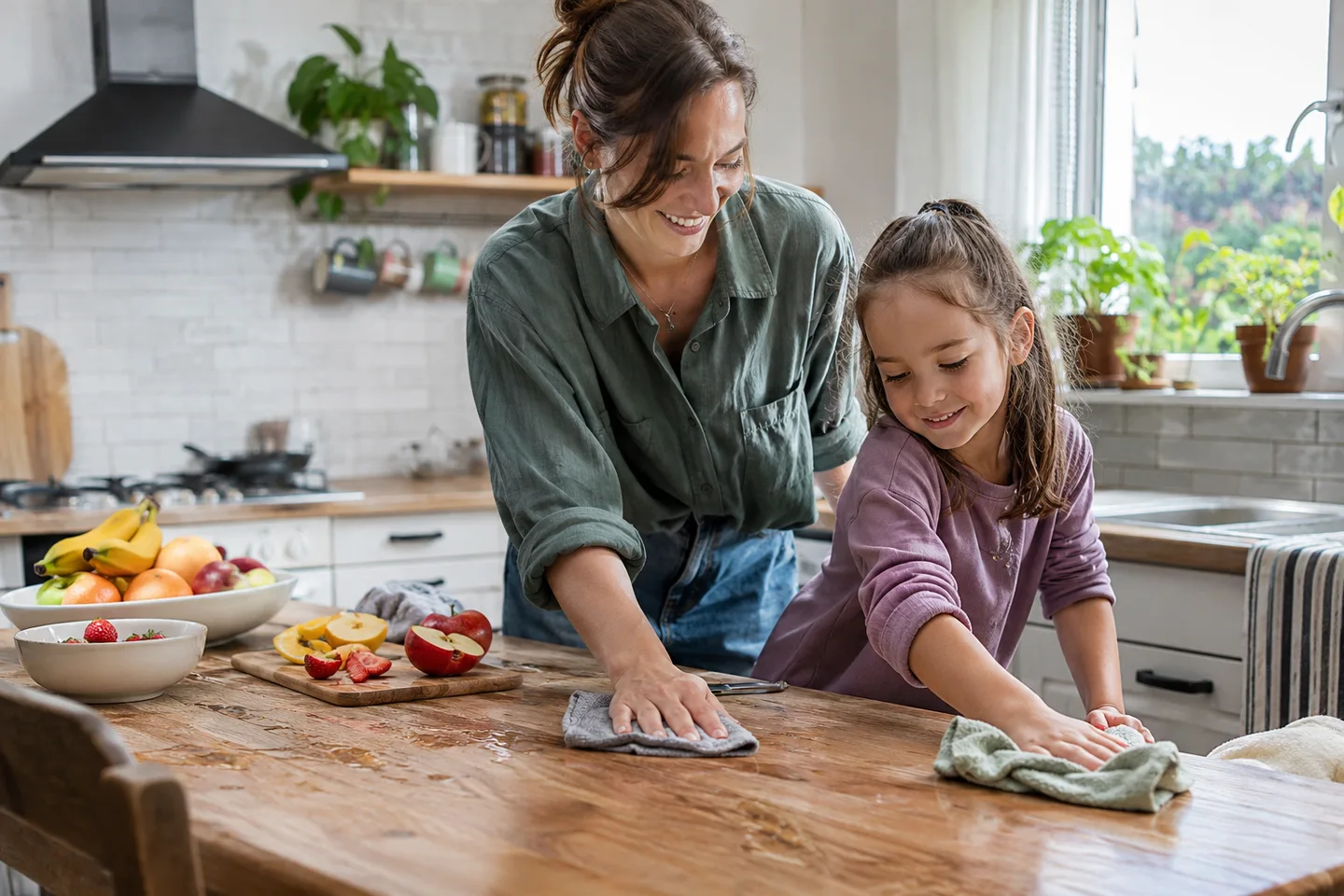
The fruit is on the plates, but the table still holds peel, a damp patch, and a few utensils. This is a natural point for a child to help finish the shared task. Cleanup works best when it is included in the plan from the beginning, with a small role the child can understand and an adult retaining responsibility for hygiene and hazards.
The activity described here is the cleanup after a simple, supervised food preparation session, such as arranging washed fruit. It is not a guide to handling raw ingredients or cleaning with chemicals. Keep your household's established food safety and allergy precautions in place. Choose tasks suited to the child's age, abilities, and the particular kitchen.
Make the area safe before inviting help
An adult should remove knives, hot equipment, breakable items, and anything unsuitable for the child to handle. Check the floor for spills and keep the route through the kitchen clear. The child should work from a stable position without climbing on improvised supports. If the area is busy or unsafe, give them a task elsewhere.
Put cleaning products away securely. Children do not need to mix products, spray surfaces, or handle strong cleaners to participate. A suitable damp cloth on a cool table may be enough for their part, while an adult carries out any additional cleaning required. Explain which tools belong to the adult so the boundary is clear before work begins.
Show the whole job in a few parts
Describe the sequence briefly: clear the table, collect scraps, wipe the surface, and return suitable items. Use the actual objects as you explain. A child can see that the empty bowl needs a destination and that crumbs need collecting before wiping. This is easier to follow than a general command to clean the kitchen.
Choose one or two parts for the child. They might carry unbreakable plates to an agreed place or collect paper scraps into a suitable container. Adults should handle heavier, sharp, hot, or otherwise unsuitable items. Sharing the work means assigning meaningful actions within safe limits, not dividing every task equally regardless of the risks involved.
If food remains after the activity, an adult should decide how it is stored or discarded under normal food safety practices. The child can bring a suitable empty container or help identify which plate needs attention. Do not assign them the decision about whether food is still safe. Their cleanup role can be meaningful while those judgments stay clearly with the responsible adult.
Give scraps a clear destination
Set out the appropriate waste container or show the child where scraps belong under your household's usual system. Keep the task simple. You can distinguish food scraps from clean reusable materials without introducing a complicated sorting exercise while the table is wet and everyone is ready to eat.
If a child is unsure, invite them to ask rather than guess. Some packaging needs adult checking, and local disposal rules may differ. Avoid making broad claims about what can be composted or recycled everywhere. Use the system your household actually follows and explain a specific decision when it matters to the object in front of you.
Demonstrate one useful wiping motion
For a suitable surface, show how to gather crumbs toward a hand or a container before wiping the damp area. Then give the child a cloth they can grip comfortably. Use a manageable section of the table. A small visible area with a clear edge is easier than asking them to inspect and clean every surface in the room.
Stay close enough to notice problems without correcting every stroke. If crumbs are being pushed onto the floor, pause and demonstrate the collection step again. Keep the feedback practical: “Let's gather these first.” The aim is to help the child understand the method, while the adult checks that the final cleaning meets the household's needs.
Separate practice from the final hygiene check
A child may contribute sincerely while leaving sticky patches or missing a corner. Adults should check and complete the cleaning as needed, especially on surfaces used for food. You can explain that shared work includes a final adult check without dismissing the child's effort. Do not pretend the area is ready if it still needs attention.
Offer a specific observation. “You cleared the whole middle section; I will finish around the edge.” This identifies what the child accomplished and what remains. Avoid turning the check into a surprise inspection in which the child loses credit for helping. They are learning a practical task under supervision, not taking responsibility for the kitchen's overall hygiene.
Keep water and cloths manageable
An adult can prepare and wring out a cloth so it is damp rather than dripping. Keep excess water away from electrical equipment and unsuitable surfaces. A child does not need an open bucket beside their feet. Use the smallest sensible setup for the job, and follow the care guidance for the furniture or worktop.
Explain where the used cloth goes afterward under your normal household practice. It should not be left mixed with clean food utensils or used for unrelated tasks without appropriate care. An adult can manage laundering or sanitizing as required. The child can learn the distinction between a clean tool ready for use and a used tool awaiting attention.
Make carrying tasks realistic
Invite the child to carry one light, unbreakable item at a time along a clear route. Show the destination first. A child who reaches the sink without knowing where to place the bowl may balance it awkwardly or set it on something unstable. The destination is part of the instruction, not an obvious detail everyone automatically knows.
If a sibling wants to help, assign separate actions that do not require crossing paths with full hands. One can collect suitable items while the other wipes a cleared section. Adults can coordinate the sequence. Keep the pace calm. A race to finish may create spills and make a useful shared task feel unnecessarily competitive.
Respond to accidents by reducing the problem
If something spills, stop movement through the area and have the child step back while an adult assesses it. Deal with breakage, hot liquids, or other hazards directly. For an ordinary small spill in a safe place, you may be able to show the child how to help. The response depends on the situation, not on a blanket rule that children clean everything they spill.
Avoid making accidents the center of a character lesson. Explain what happened and what will make the next attempt easier. Perhaps the bowl was too full or the route was blocked. Adjust the setup. A child who expects a practical response is more likely to report a spill promptly, which helps adults manage it before someone slips or touches something unsuitable.
Finish the work and return to the meal
When the assigned tasks are done, show the child the result: the table is clear, the cloth is put aside, and the plates are ready. Follow normal handwashing practices before returning to food. The adult can complete any remaining kitchen work while the child joins the meal or moves to another appropriate activity.
Notice the contribution in concrete terms. “You carried the bowls and gathered the scraps, so we could clear the table together.” There is no need to attach a reward to every action. Cleanup is part of preparing and sharing food, and the child's role can grow gradually as abilities and circumstances allow. A small, well supervised job is a useful place to begin.
After the meal, consider whether the task was genuinely manageable. If the child needed constant correction, simplify the next attempt or change the tools and destination. If they handled it comfortably, keep the same role for a while before adding another. Familiarity can make shared work smoother without requiring a new challenge every time the family prepares something together.
For general educational information. Adapt ideas to your family and consult a qualified professional for individual concerns.