The missing water bottle is not always a memory problem. Sometimes it has no agreed place to return to, or its place is behind a heavy cupboard door the child cannot manage. Before adding another reminder, look at the journey the object takes through the home. A useful storage arrangement makes that journey shorter and easier to understand.
You do not need to reorganize every cupboard. Start with one recurring difficulty: a backpack on the floor, shoes across the doorway, or a favorite book that disappears under other things. Give that category a clear home the child can use safely. Then observe whether the change helps before expanding the system.
Watch the real arrival route
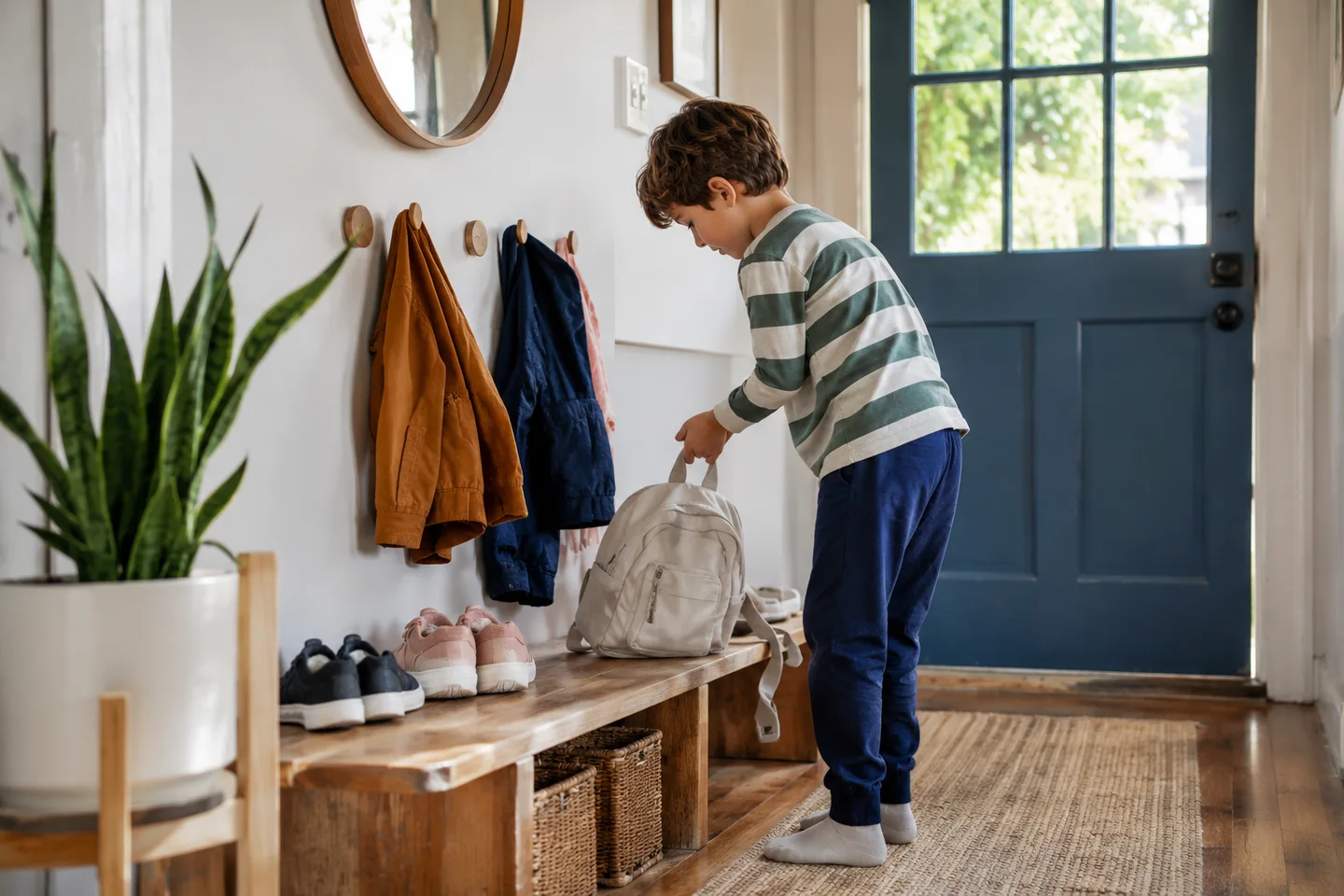
Notice what happens when the child enters the home. Where do they stop? What are they carrying? Which item do they put down first? A storage place on that route is more likely to be used than one chosen mainly for appearance. The goal is a practical fit with behavior, not a photograph of a perfectly empty hallway.
Ask the child what makes the current arrangement difficult. The hook may be too high, the box may be full, or the shoes may have no room beside everyone else's. Listen for a physical obstacle before interpreting the behavior as unwillingness. A small change in reach or capacity can remove a problem that repeated instructions have not solved.
Keep access safe and simple
Adults should choose and secure furniture, hooks, and fixings appropriately for the home. Follow product guidance, keep exits and walking routes clear, and avoid arrangements that invite climbing or could tip. Children should not need to stand on an unstable object to put away a daily belonging. Heavy, fragile, or unsuitable items need adult managed storage.
A low basket may be enough for a light backpack if a wall hook is impractical. Shoes can sit in a shallow tray that does not protrude into the route through the room. Think about how the arrangement behaves when full, not only when empty. A crowded container can quickly become harder to use than the original pile.
Give borrowed belongings a temporary place too. A library bag or a friend's large toy may need to remain separate from items the family owns. A small return basket can help, provided it stays manageable and does not obstruct the room. Tell the child when the borrowed item will leave so that putting it there has an understandable purpose beyond making the space look tidy.
Give each place a clear job
Choose a narrow purpose for the first storage place. “School bag here” is easier to follow than a box that contains shoes, craft materials, outdoor toys, and papers. A broad category can work when the items naturally belong together, but too many unrelated objects make returning something a sorting problem every time.
Use a simple picture or label if it helps. Let the child recognize the place through position as well as words. There is no need to label every surface. If two children share a container, agree on sections or separate spaces only where that prevents confusion. The arrangement should reduce decisions rather than create a new set of rules.
Practise the return journey once
Walk through the action with the child at a calm time. Carry the bag in, place it in its new home, and check whether anything gets in the way. Then let the child try. A rehearsal can reveal details adults miss, such as a strap catching on the hook or a lid that closes before the item is inside.
Keep the instruction brief and connected to purpose. “This keeps the walkway clear and helps us find your bag” explains why the action matters. Avoid demanding that the child repeat the routine many times. One useful attempt and a small adjustment are enough to begin testing the arrangement in ordinary life.
Separate returning from emptying
Putting a bag away and checking its contents are different tasks. A child may be able to do one independently while needing help with the other. Decide when lunch containers, damp clothing, or school papers are removed, and who assists. Do not assume that reaching the hook means every part of unpacking has been completed.
You can place a small adult managed tray nearby for papers that need attention. Explain which items belong there and which stay in the bag. Keep personal documents out of public view. The child's role can be as simple as handing over a folder, while adults remain responsible for reading important information and arranging any required response.
Make reminders point to the place
During the first days, use a specific prompt: “Where is the backpack's home?” or “The shoe tray is ready.” This directs attention to the agreed action. A broad criticism such as “You never put anything away” adds frustration without clarifying what to do next. Expect some reminders while a new arrangement becomes familiar.
If the child is tired or carrying several things, share the task. You might hold the door while they put the bag down, then help with the coat. Assistance does not invalidate the system. It shows that the arrangement serves people whose energy and circumstances vary, rather than becoming a test they must pass after every arrival.
Leave room for things in use
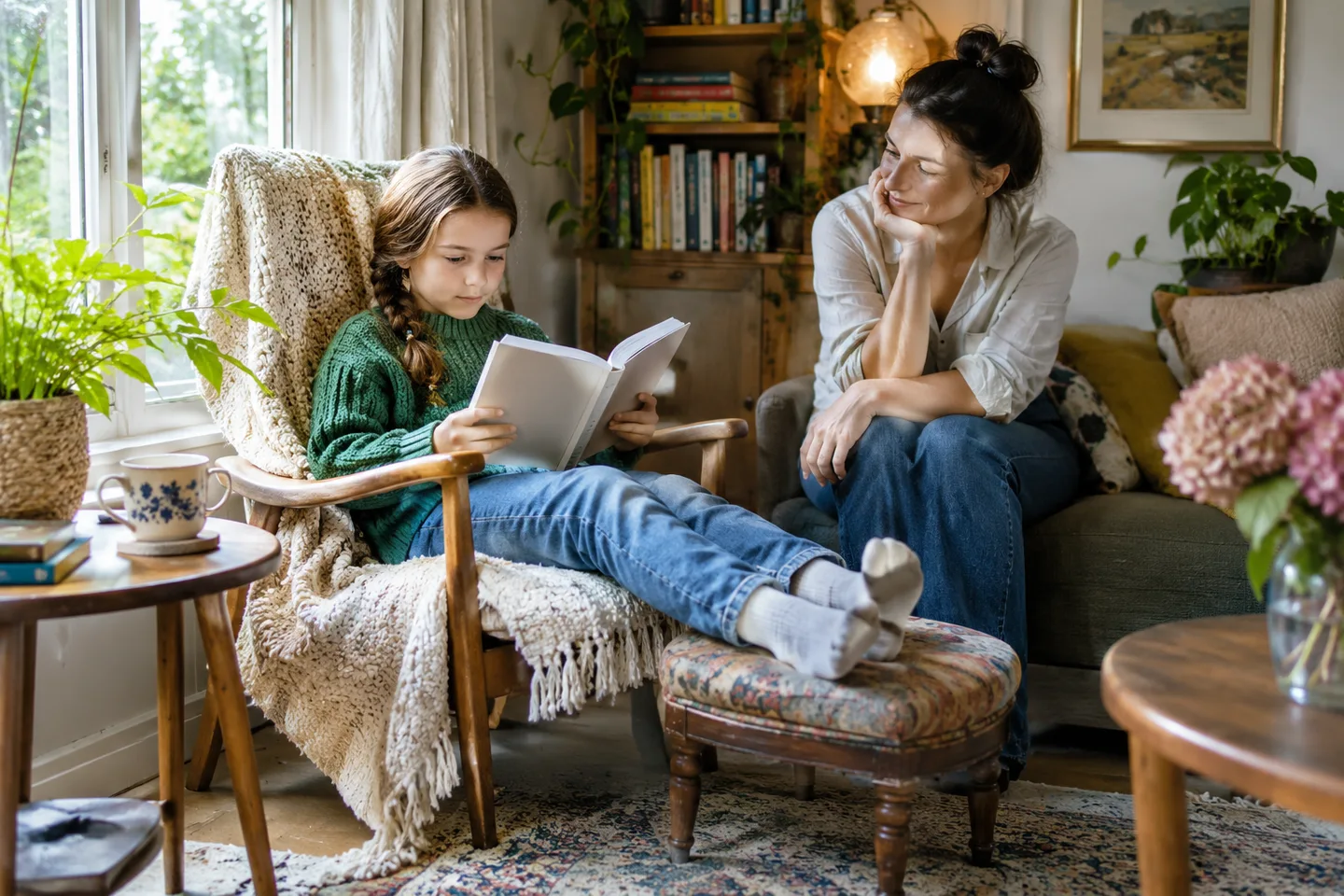
A home is not untidy simply because an activity is happening. Decide where current projects can remain and where belongings should return after use. A book beside the reading chair may be in a sensible temporary place, while shoes across a doorway create a different issue. Explain the distinction in terms the child can see.
Offer a limited place for unfinished work if needed. A tray or folder can hold a drawing until tomorrow. Without such a place, “put everything away” may feel like a demand to abandon the activity. A workable system recognizes both storage and ongoing use, with a clear point when shared space needs to change purpose.
Check capacity before blaming consistency
If the container overflows, reduce its contents or choose a better sized place. Do not keep adding objects while expecting the same easy return. Seasonal clothing, borrowed equipment, and school projects can alter what the space must hold. Review the arrangement when these changes happen instead of assuming a formerly useful setup should work forever.
Invite the child to identify what is awkward. They may suggest turning the basket, moving a label, or leaving one shelf empty. Try a sensible change for a few days. Children's suggestions will not all be practical, but involving them in a real adjustment can make the purpose of the system clearer and reveal a solution an adult overlooked.
Measure success by easier use
Ask whether the bag is easier to find, whether the walkway stays clearer, and whether returning the item takes less effort. These are more useful measures than whether the room looks untouched. A storage system should support the life happening around it. It does not need to conceal every trace that children live there.
Once the first place works reasonably well, choose another if there is a real need. Stop before the system becomes elaborate. A few dependable homes for frequently used belongings can make a small space more comfortable for everyone. The child gains a practical role in maintaining that comfort, with an environment designed to make the role possible.
Notice specific improvements aloud without turning them into rewards for perfection. “We found the bag where we expected it” connects the action with its benefit. If the item is missing again, retrace its route together and restore the system. The point is to make recovery simple, so that an occasional lapse does not become a reason to abandon an arrangement that usually helps.
For general educational information. Adapt ideas to your family and consult a qualified professional for individual concerns.